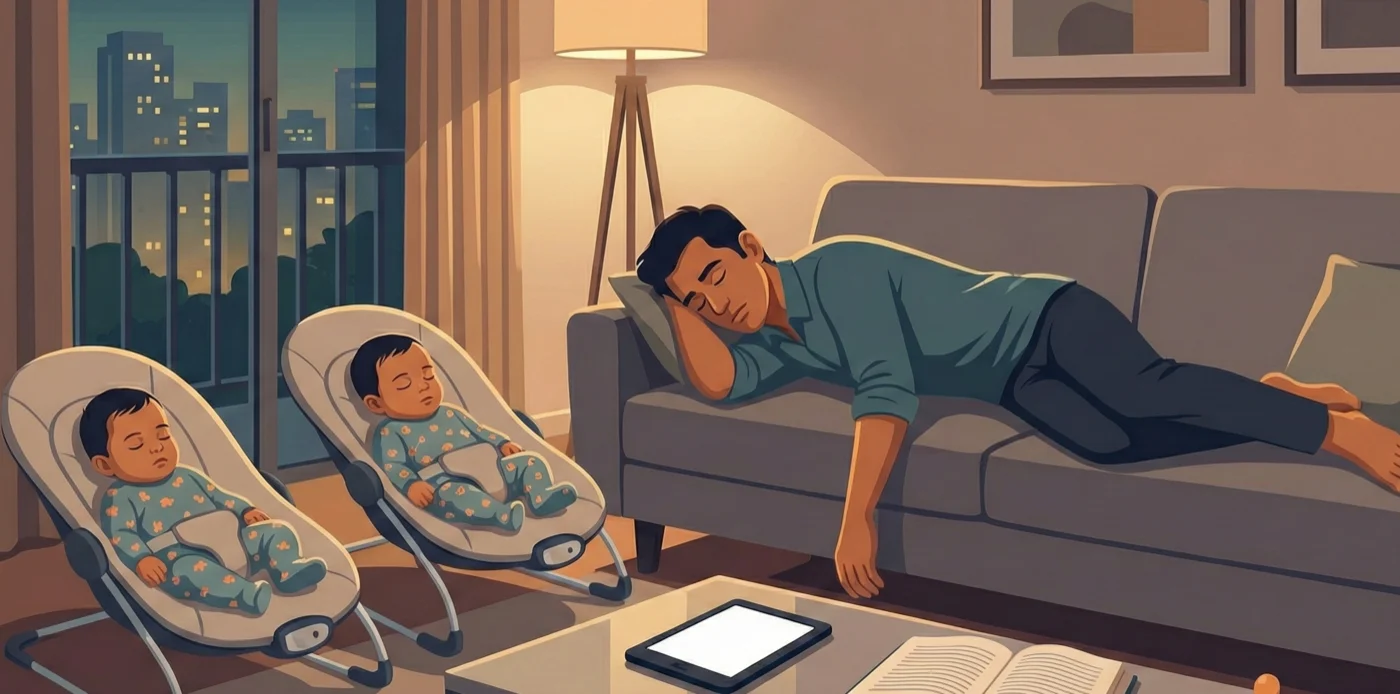
In 2020, I had twins. In 2021 and 2022, I read zero books.
Not a single one. Between raising two infants during Covid, working from home, and the general chaos of those years, there was no time left for reading. Whatever free moments existed went to sleep. Or staring at walls.
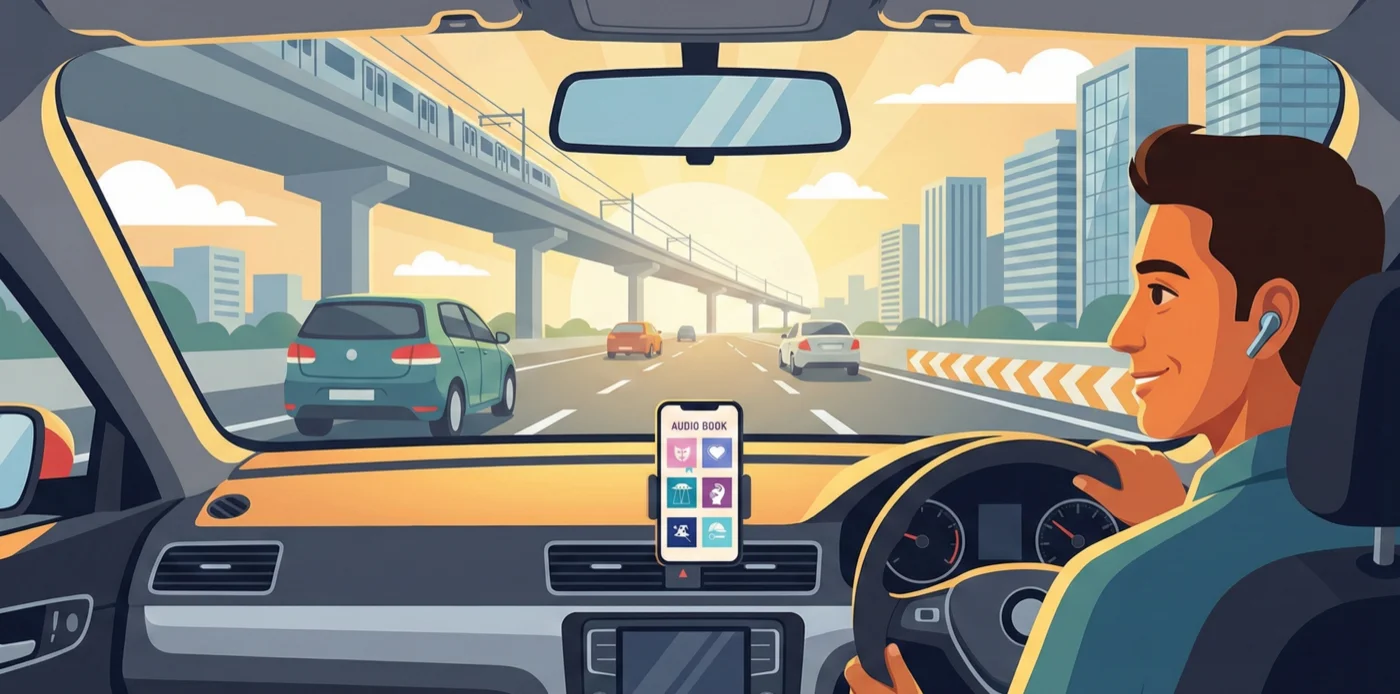
Then my work-from-home ended. And I inherited a 3-hour daily commute between Gurgaon and Noida.
Most people would see that as a problem. I decided to see it as a library.
Enjoying this?
Get the next essay in your inbox, most Sundays.
The shift to audio
I tried physical books first. Even bought a Kindle. But the fundamental problem remained: at home, there was no “me time.” Every moment was either work or family. Reading required a kind of quiet focus that simply didn’t exist in my life anymore.
Audiobooks changed the equation. Suddenly, the commute wasn’t dead time. It was learning time. Three hours a day, five days a week, with nothing to do but drive and listen.
I started with podcasts but found myself constantly hunting for new ones. The discovery tax was annoying. Audiobooks solved that: pick a title, and you have 8-15 hours of content. No hunting required.
From zero books in 2021-22, I’ve now listened to 38 books over the past three years. And counting.
The comfort food strategy
Here’s what I learned early: not every listening session needs to be intellectually demanding.
Some days you’re sharp and curious. Other days you’re tired, traffic is bad, and your brain just wants to coast.
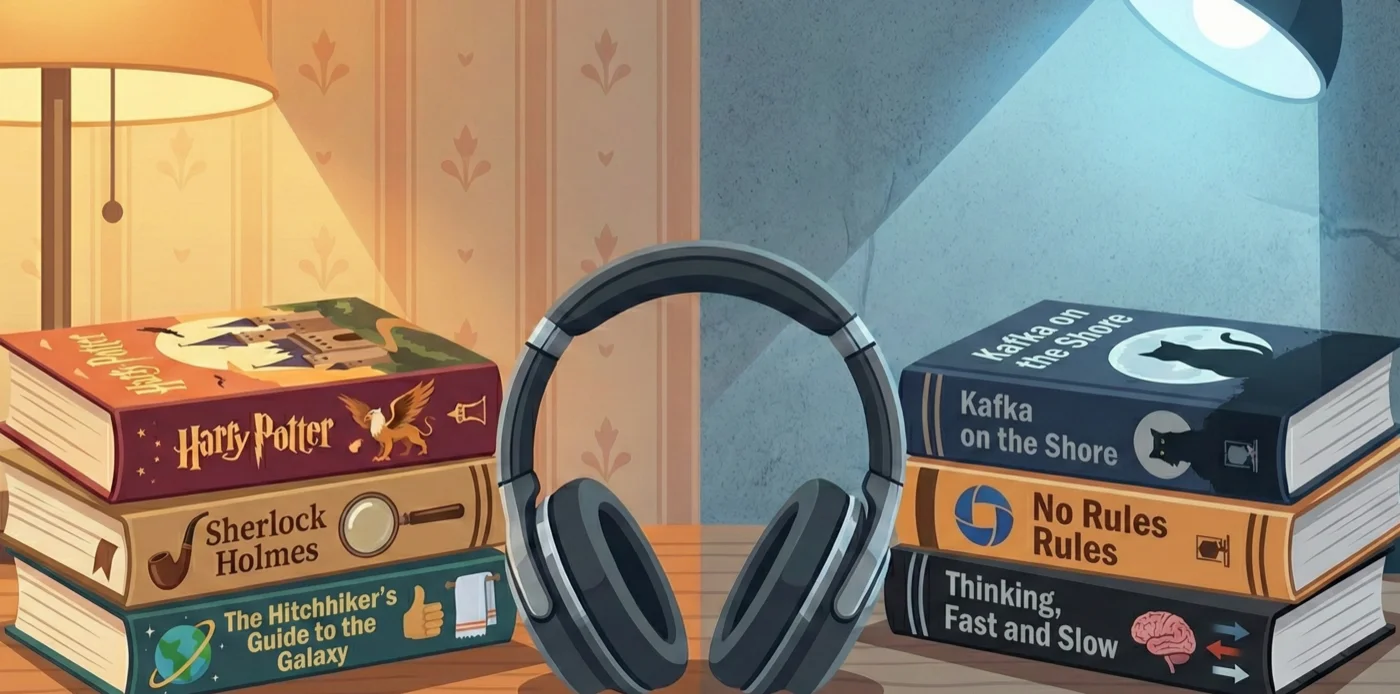
I started mixing familiar books with new ones. Harry Potter. Sherlock Holmes. P.G. Wodehouse. Books I’d read before or always meant to read. Listening to them was like eating comfort food. Easy to follow, pleasant to revisit, no cognitive strain required.
The new titles — Kahneman’s Thinking, Fast and Slow, Harari’s Nexus, Cixin Liu’s Three-Body Problem — were different. Intellectually stimulating but exhausting. Nutritious food for the brain. I couldn’t do them back-to-back without burning out.
Alternating between the two kept the habit alive. Finish something dense, reward yourself with something light. It sounds simple, but it’s why I’m still listening three years later.
What worked (and what didn’t)
Not every audiobook works in audio format. I’ve started plenty that I never finished. The reasons usually fall into three categories:
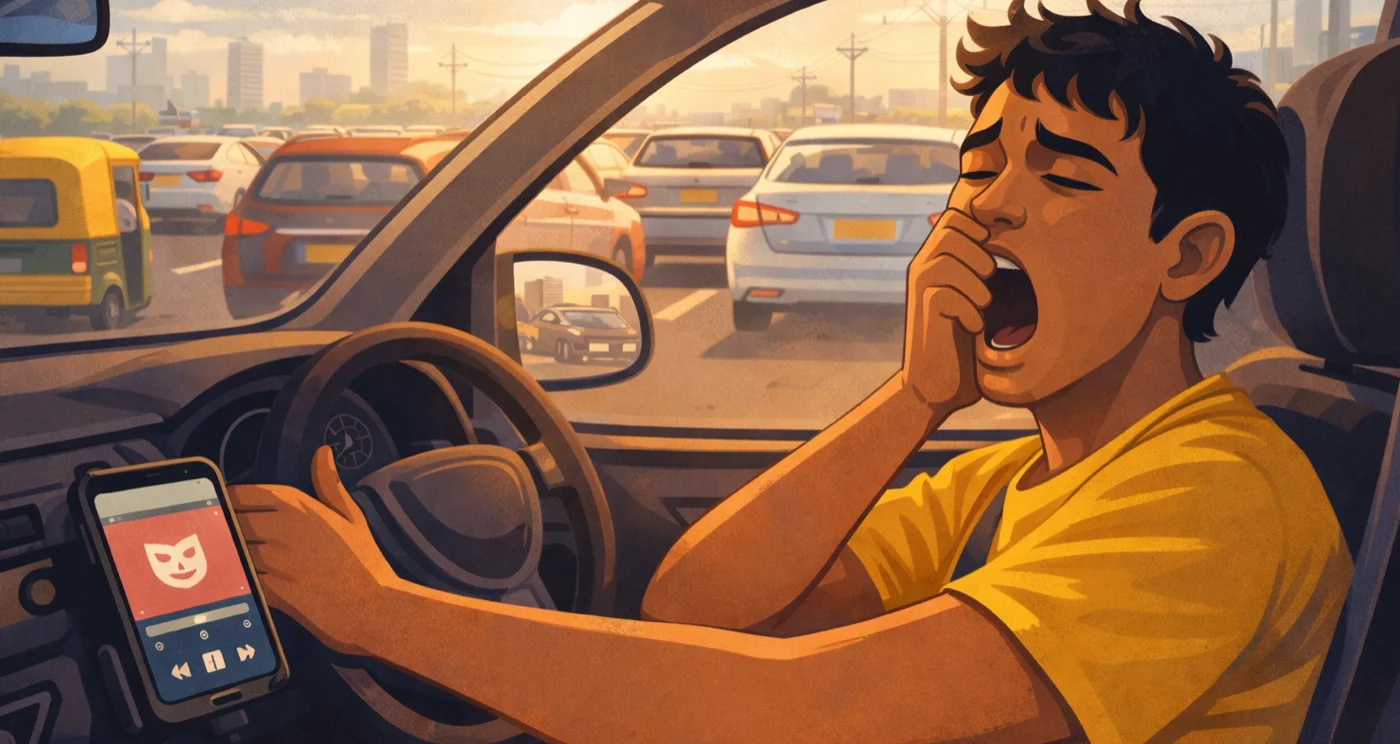
Pacing. Some books are slow. They take forever to build their narrative, meandering through setup and context. In print, you can skim. In audio, you’re trapped. A few of these actually made me drowsy while driving — which is when I learned to abandon books without guilt.
Narration. The narrator matters more than I expected. Some are robotic. Some drone. Some have accents that don’t click with your ear. And then there’s Stephen Fry. His narration of Sherlock Holmes, Mythos, Heroes, and Troy is so engaging that I’ve recommended those specifically to people new to audiobooks. A good narrator turns a book into a performance.
Visual dependencies. Some books reference charts, graphs, or images constantly. “As you can see in Figure 3.2…” — except I can’t see anything because I’m driving. This breaks the experience. I’ve learned to check reviews for warnings about this before starting.
The books that stuck with me
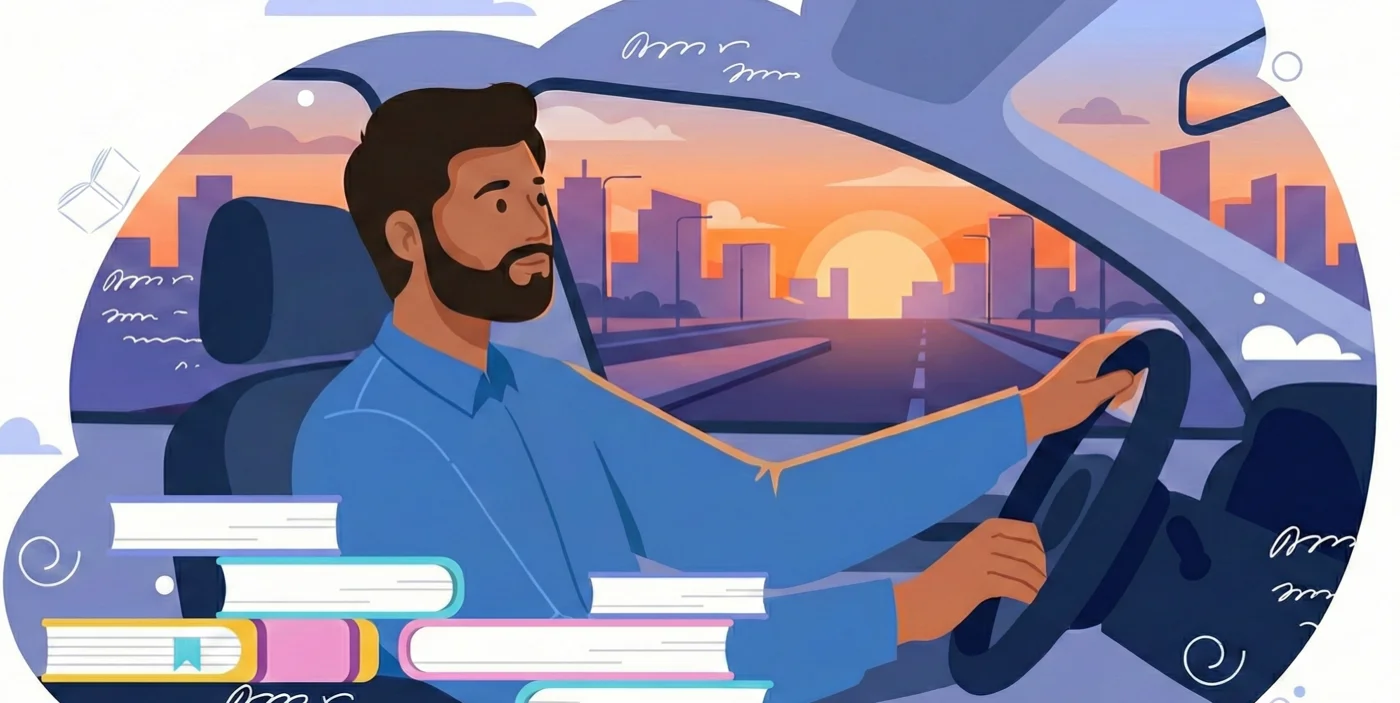
Out of 38 books, a handful have genuinely changed how I think:
No Rules Rules by Reed Hastings — Netflix’s culture of radical candor and talent density. Made me rethink how I give feedback to my team.
The Ride of a Lifetime by Bob Iger — Disney’s CEO on leadership. One story about owning mistakes publicly stayed with me so strongly I wrote a separate post about it.
The Remains of the Day by Kazuo Ishiguro — Not a business book. A quiet, devastating novel about a butler reflecting on his life. It hit differently while stuck in traffic, thinking about my own choices.
Thinking, Fast and Slow by Daniel Kahneman — Dense, took me weeks, but the mental models (System 1 vs System 2, anchoring, loss aversion) show up in my work constantly.
The Three-Body Problem trilogy by Cixin Liu — Science fiction that made me feel small in the best way. The scale of imagination is staggering.
The full list
For the curious, here’s everything I’ve finished or am currently working through:
Business & Psychology: The Ride of a Lifetime, No Rules Rules, Thinking Fast and Slow, Atomic Habits, The Art of Spending Money, Outliers, The Man Who Solved the Market, Inspired, The Design of Everyday Things, Poor Economics
Science Fiction & Fantasy: The Three-Body Problem, The Dark Forest, Death’s End, The Wandering Earth, Dune, Hitchhiker’s Guide to the Galaxy, The Restaurant at the End of the Universe
Literary Fiction & Classics: One Hundred Years of Solitude, Kafka on the Shore, The Remains of the Day, To Kill a Mockingbird, 1984
Philosophy & History: Nexus, 21 Lessons for the 21st Century, Homo Deus, The Rise and Fall of the Third Reich, Caste, Inglorious Empire
Comfort Reads: Harry Potter (Full-Cast editions), Sherlock Holmes (Stephen Fry), P.G. Wodehouse, Mythos, Heroes, Troy
Parenting: How Children Learn, The Book You Wish Your Parents Had Read, You Your Child and School
The mix wasn’t planned. It just happened. But looking back, the variety is what kept me going. Heavy book, light book. Fiction, non-fiction. English, Hindi. No rules except: keep listening.
Will it stick without the commute?
Honestly? I don’t know.
I’ve tried listening during morning walks. It hasn’t stuck the same way. There’s something about being trapped in a car, with no other option, that makes the habit effortless.
If my commute disappears, I’ll have to find a new forcing function. Maybe that’s the real lesson here: habits are easier when you remove the need for willpower. The commute did that for me. It turned “should I read today?” into “what should I listen to today?”
If you have dead time in your day — commute, gym, chores — and you’re not reading as much as you’d like, try audiobooks. Start with something familiar. Mix in something new. Don’t feel guilty about abandoning books that aren’t working.
And if you want a recommendation for your first one: anything narrated by Stephen Fry.